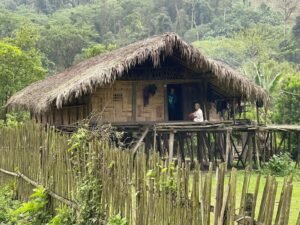
Khanpi is a beautiful village located in the Churachandpur district of Manipur, India. It falls under the Henglep area and is surrounded by the natural beauty of the hills and greenery of Manipur. According to the 2011 Census, Khanpi had a population of 453 people living in 43 households.
Khanpi has a rich history and cultural identity. Local records state that the village was established in 1809 by Pu Palal (Khamzalal) and his brothers. The Gangte dialect is traditionally spoken by the people of the village. Agriculture, particularly shifting cultivation, has traditionally been an important occupation for the community.
The people of Khanpi are known for their strong sense of community, hospitality, and traditional way of life. Various cultural, religious, and community events are observed throughout the year, bringing people together and strengthening their bonds. Traditional activities such as weaving, gardening, fishing, and football are also part of village life.
Khanpi is a beautiful and culturally rich village located in the Churachandpur district of Manipur, India. Situated in the hilly region of Manipur, the village is surrounded by natural greenery and enjoys a peaceful rural environment. The village has a strong sense of community, with its social, cultural, religious, and administrative affairs supported by various local institutions and organizations.
The Village Authority serves as an important traditional administrative body of Khanpi. It plays a central role in maintaining peace, resolving local matters, coordinating community activities, and overseeing issues concerning the welfare and development of the village. Through the cooperation of village leaders and residents, the Village Authority helps preserve the unity and traditional values of the community.
The Young Mizo Association (YMA), Khanpi Branch, is another important organization in the village. The YMA contributes significantly to the social and cultural life of the community, particularly by encouraging young people to participate in community service, cultural activities, cleanliness drives, social welfare programs, and other activities that promote unity and responsible citizenship.
The Mizo People Convention (MPC), Khanpi Unit, represents another important community organization. The MPC works toward the social, cultural, and collective interests of the people and provides a platform through which community concerns can be discussed and addressed. Its activities also contribute to the preservation of Mizo identity, traditions, and community solidarity.
Religious life is an important part of the community in Khanpi. The village is served by one church, the Evangelical Synod Church, which functions not only as a place of worship but also as an important center for fellowship, spiritual development, and community activities. The church brings people together through worship services, youth activities, charitable initiatives, and various programs that strengthen social bonds.
Together, the Village Authority, YMA Khanpi Branch, Mizo People Convention Khanpi Unit, and Evangelical Synod Church form important pillars of community life in Khanpi. Their cooperation helps maintain social harmony, preserve cultural traditions, encourage community participation, and promote the overall welfare of the villagers.
Khanpi therefore represents a close-knit rural community where traditional leadership, youth participation, cultural organizations, and religious institutions work alongside one another. The village’s strong community spirit and cultural heritage make it a meaningful part of the diverse social and cultural landscape of Manipur.